
Ship a Car to Nigeria from the USA
The discharge port
Lagos is not one port, and the difference is your consignee's problem
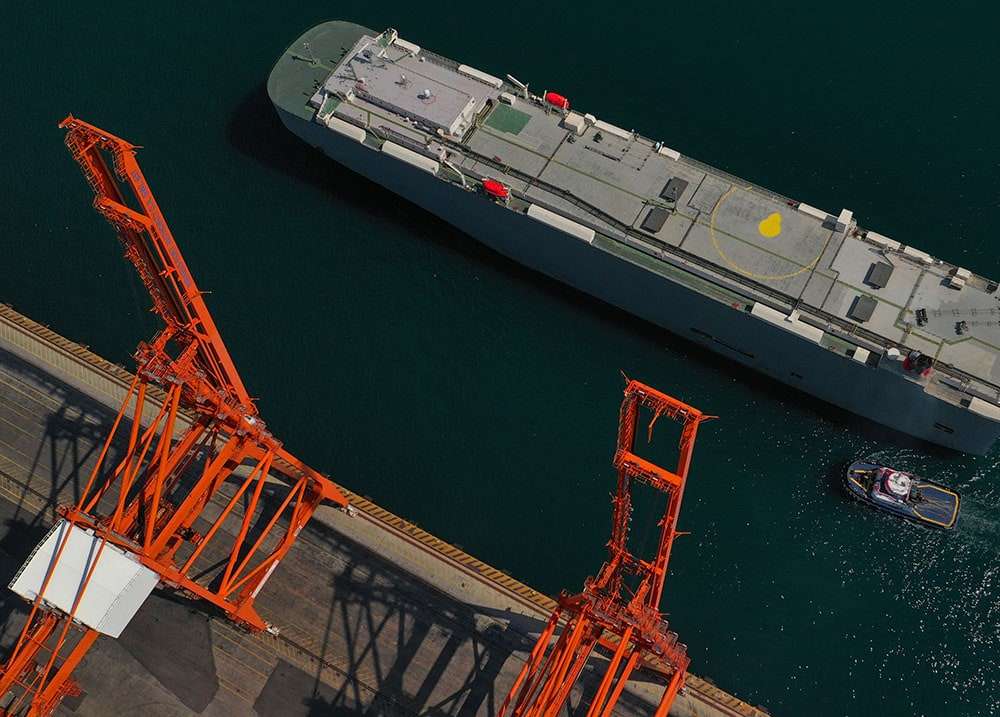
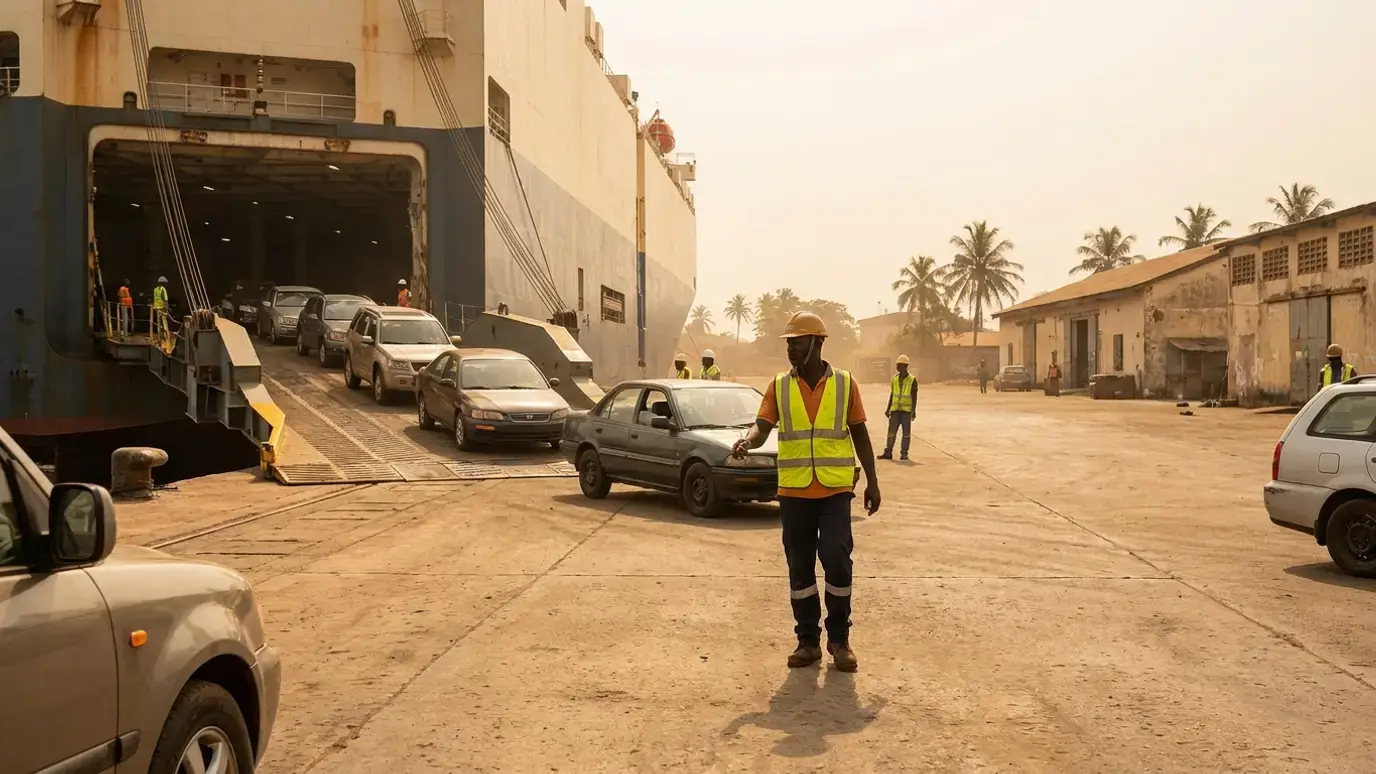
Almost everything shipped from the United States to Nigeria discharges at Lagos. But "Lagos" on a booking covers two separate marine terminals, Apapa and Tin Can Island, and they are not interchangeable. They sit on opposite sides of the same harbour, they are reached by different road approaches, and the agent who clears units at one is not automatically the agent who clears them at the other.
For a first-time shipper this matters for one blunt reason: the person collecting your vehicle needs to be told which terminal it landed at, and that is decided by the vessel, not by preference. For a dealer moving units monthly it matters more, because your clearing agent's efficiency at one terminal tells you nothing about the other, and a delivery order raised against the wrong terminal is days lost before anyone has looked at your paperwork.
Ask us which terminal the sailing you are booked on discharges at. It is a question with a real answer, and it is worth asking before the vessel leaves rather than after it arrives.
A constraint most guides miss
The vehicle has to arrive by sea. There is no land route.
Nigeria closed its land borders to vehicle imports on 1 January 2017, and that closure has held for over nine years.
This kills a route that used to be common and is still quietly suggested: land the car at a neighbouring West African port because the sailing looks cheaper or sooner, then move it overland into Nigeria. That is no longer an import route. It is a vehicle stuck on the wrong side of a border.
So the practical rule for this lane is simple. The vessel that carries your car must be a vessel that calls at a Nigerian seaport. Anyone offering you a cheaper landing somewhere else with an overland leg attached is either working from pre-2017 habits or is not telling you what happens at the end of it.
This is a durable point rather than a volatile one, but it is under active repeal pressure, so it carries the same review cadence as everything else on this page.
The route
Two carriers serve this lane, and that changes your paperwork
We book Nigeria on both Sallaum Lines and Grimaldi. That is unusual: most of our West African lanes are effectively single-carrier, and Nigeria is not.
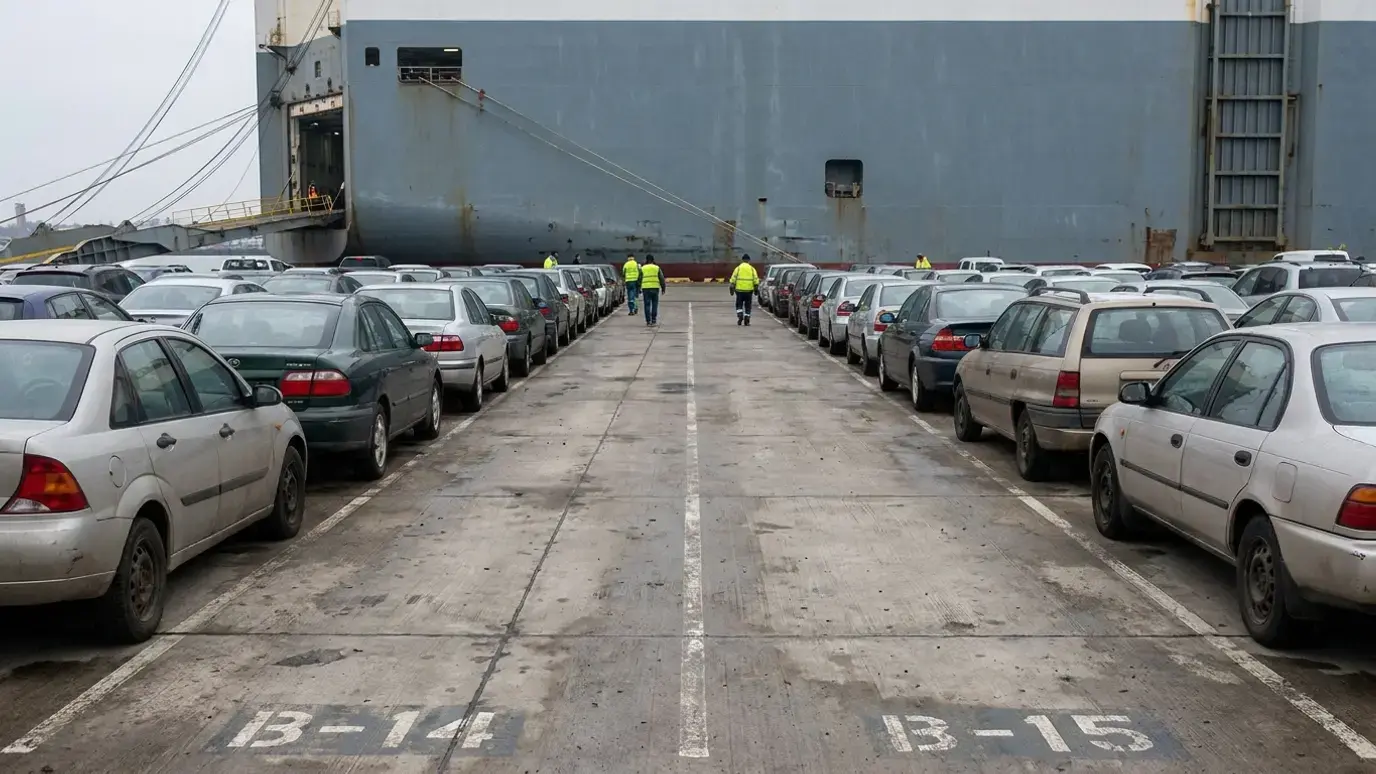
Having two carriers is useful, because it gives you two sets of sailing dates and two sets of loading terminals to work with. It also has a consequence people discover at the gate: the document set follows the terminal and the carrier, not the country. The same US city can appear twice in our records under two carriers with two different requirements, and the gate clerk applies the one in front of them.
The terminals below are the ones we load from, taken from our own loading ports record. Two of them, Newark and Jacksonville, exist twice in that record under different carriers, which is exactly where units get turned away.
On transit time, we publish nothing here on purpose. Carrier schedules move, and a transit range copied onto a marketing page is out of date within weeks. Ask us and we will give you the current sailing and cut-off from the carrier's own schedule for the vessel you are actually booked on. The cut-off is the date that decides whether your car sails, not the advertised departure.
Sallaum Lines
Jacksonville, FL
- Where
- Horizon Terminal Services, 5263 Intermodal Drive, Jacksonville, FL 32226
- Paperwork at the gate
- Original title, 2 copies of the front and back of the title, 5 copies of the dock receipt.
- Receiving
- Monday through Friday, 8 AM to 4 PM. Telephone 904-757-1227.
Grimaldi
Jacksonville, FL
- Where
- Horizon Terminal Service, 5263 Intermodal Drive, Jacksonville, FL 32226
- Paperwork at the gate
- Original title, 5 copies of the front and back of the title, 4 copies of the dock receipt.
- Telephone
- 904-757-1227
TWIC Card is required
Sallaum Lines
Baltimore, MD, South Locus
- Where
- Tartan Terminals, 2025 E. McComas St, Baltimore, MD 21230
- Paperwork at the gate
- Original title, 3 copies of the front and back of the title, 3 copies of the dock receipt.
- Telephone
- 443-510-4646
Sallaum Lines
Baltimore, MD, Amports
- Where
- 3201 Vera Street, Baltimore, MD 21226
- Paperwork at the gate
- Original title, 3 copies of the front and back of the title, 3 copies of the dock receipt.
- Receiving
- Monday through Friday, 8 AM to 4 PM. Telephone 410-843-7141, amportspov@amports.com.
Sallaum Lines
Norad Davisville, RI
- Where
- 30 Marine Rd, North Kingstown, RI 02852
- Paperwork at the gate
- Original title, 5 copies of the front and back of the title, 4 copies of the dock receipt.
- Receiving
- Monday through Friday, 7 AM to 3 PM. Telephone (401) 667-7000 x 124.
Sallaum Lines
Philadelphia, PA
- Where
- Pier 122, Philadelphia, PA 19112
- Paperwork at the gate
- Original title, 1 copy of the title front and back, 3 copies of the dock receipt. The lightest title requirement in our whole record.
- Receiving
- Monday through Friday, 7:30 AM to 2:30 PM. Telephone 412-504-1607.
Grimaldi
Newark, NJ
- Where
- Ports America, Port Newark Auto Terminal, Berths 16 and 18, 171 Marsh Street, Newark, NJ 07114
- Paperwork at the gate
- Original title, 6 copies of the front and back of the title, 6 copies of the dock receipt. Six and six is the heaviest set we handle.
- Telephone
- 973-465-6812
TWIC Card is not required
Sallaum Lines
Freeport, TX
- Where
- Horizon Terminal Services LLC, 1341A Pine Street, Freeport, Texas 77541
- Paperwork at the gate
- Our record for this terminal carries contact details and receiving hours but no document count. Ask us for the current requirement before you deliver, and do not assume it matches the Grimaldi record at the same address.
- Receiving
- Monday through Friday, 8 AM to 4 PM. Telephone 979-415-0225, fpocustserv@horizonterminals.com.
These counts are our own operational records, and terminal requirements change. They were last confirmed against our loading ports record on 8 August 2026. Before you drive to a gate, ask us to re-confirm the count for the specific terminal and carrier on your booking. Arriving with four copies where the terminal wants six is a wasted trip, and terminals do not make exceptions for distance travelled.
Why the counts matter more here than elsewhere
Same city, two carriers, two different answers
Because Nigeria is served by both carriers, this lane is where our records disagree with themselves most usefully. Look at Jacksonville. On Sallaum the gate wants two copies of the title and five dock receipts. On Grimaldi, at the same street address, it wants five title copies and four dock receipts, and it wants a TWIC card as well.
That is not an error in our records. It is what the two terminals actually ask for, and it is the reason we refuse to publish a single tidy national checklist. Averaging those two rows into "bring several copies" would make the page neater and make it useless.
The same logic applies to gate access. A TWIC is legally required only for unescorted access to a secure area, and an escorted visitor may enter on ordinary photo identification. In practice escorting costs a terminal labour, so some gates require the card, charge for an escort, or decline owner drop-off altogether. Newark under Grimaldi does not require it. Jacksonville under Grimaldi does. If you were planning to deliver the car yourself, that single line decides whether you can.
Deliveries into the terminal are also a service we run, which is usually the simpler answer if you are one person with one car and no TWIC.
How to ship it
RoRo is the default for Lagos, and container is a deliberate exception
For a single running car going to Lagos, roll-on roll-off is what we would normally book. The vehicle is driven aboard, it does not need to be loaded into anything, and both carriers on this lane run RoRo tonnage.
There are three situations where we would suggest a container instead, and all three come up regularly on this lane:
- You are shipping more than one vehicle at once. Dealers consolidating two or more units for the same Lagos consignee often do better in a container, and the units arrive together rather than potentially on separate vessels.
- You are shipping parts, spares or a stripped unit alongside the car. RoRo carries the vehicle. Loose goods inside it are a different conversation, and packing them into a RoRo unit is how shipments get held.
- The vehicle does not run, or you want it enclosed. A non-runner can still move, but the handling is different and it needs to be declared up front rather than discovered at the ramp.
Our RoRo versus container shipping guide covers the trade-off in full. It is worth reading before you decide, because the decision is easy to change now and expensive to change once a booking exists.
Arrival and clearance
What you paid for the car is not the number Customs works from
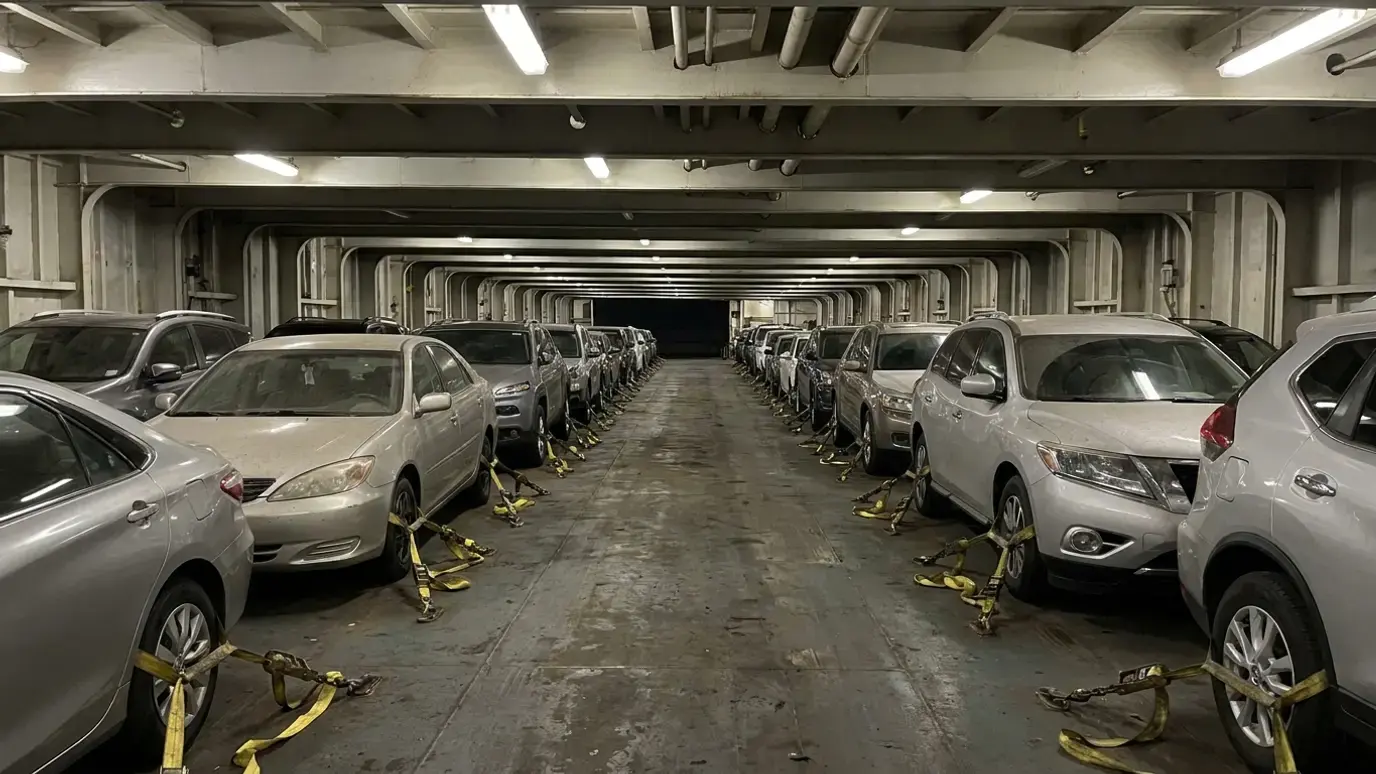
This is the single most important thing to understand about importing a vehicle into Nigeria, and it is the point where auction buyers most often get a shock.
Nigeria Customs assesses value from a VIN valuation database, not from your purchase invoice. The service assigns a value to the vehicle from its VIN, and the transaction price you actually paid is not a negotiating position. A car bought cheaply at a US salvage auction does not become a cheap car to clear. The bill is calculated against what the database says that vehicle is worth.
Two consequences follow, and they point in opposite directions for the two kinds of buyer:
- If you are an individual who found a bargain, budget from the vehicle's assessed value rather than from what you paid, and get that estimate before you bid rather than after you have won.
- If you are a dealer, the valuation basis is stable enough to model, which is useful. What is not stable is the scheme's status: VIN valuation has been suspended and reinstated more than once, most recently coming back into force around August 2025. Anyone quoting you a clearing cost should be telling you the date their information is from.
On the charges themselves we are going to be less specific than most pages you will read, and the reason is that the pages being more specific do not agree with each other. Nigeria's fiscal policy measures changed twice in 2026 alone. Nigeria Customs describes the reduction as a cut to the levy on used vehicles with the duty itself unchanged, while the Comptroller-General has publicly described it as a tariff cut. Those are different claims with different arithmetic, and we are not going to resolve a disagreement inside the Nigerian customs authority by picking whichever version suits a landing page. So we publish no single all-in percentage for this lane.
Two further items, both stated as shape rather than as figures, as at August 2026:
- A Green Tax Surcharge scaled to engine displacement was introduced in the April 2026 fiscal policy circular. Smaller engines are exempt and larger ones pay progressively more. If you are choosing stock for the Nigerian market, engine size is now a cost input and not only a fuel question.
- A charge assessed on the FOB value of imports was introduced in February 2025, suspended, reinstated in August 2025, then suspended again by ministerial direction in September 2025, while still being budgeted for. Treat it as suspended and treat its return as plausible.
And one thing we will not do at all: quote you a naira figure. Nigeria Customs does not set the exchange rate, and the applicable rate lives on the customs service's own platform. Any page giving you a converted naira landed cost is giving you a number that was wrong before it was published.
Nigerian import rules have moved twice in the last five months. Confirm the current position with us before you buy a vehicle. Everything in this section is stated as at the review date at the foot of this page. We arrange the shipping from the US side, and the body that decides what your vehicle costs to clear is Nigeria Customs, not us. The cost of getting this wrong lands on you at the port, which is why we would rather answer the question for your specific vehicle than publish a number that suits an average one.
The age limit
Twelve years, and the model year that follows from it
The vehicle age limit is the most consequential single fact on this page, because a buyer whose car cannot legally land has not lost a fee. They have lost the car.
The limit is reported as 12 years, reduced from fifteen in May 2022 and carried into the fiscal policy measures that followed. On a 12-year rule, a vehicle shipping in 2026 needs to be model year 2014 or newer. That is our understanding as last verified in August 2026.
Older guidance still in circulation states fifteen years. Confirm the model year with us before you commit money to a vehicle.
SONCAP
Whether SONCAP applies to a complete used vehicle
Nigeria operates a conformity assessment programme, SONCAP, administered through the Standards Organisation of Nigeria and its appointed inspection agents. Whether it applies to a complete used vehicle, as opposed to spare parts, is unsettled. The inspection agents' own scope documents differ: one lists used products excluding automobiles as exempt, which implies vehicles are in scope, and another lists only automotive spare parts as covered.
If you are shipping a complete vehicle to Lagos, raise it with us and with your Nigerian clearing agent before the unit is loaded, not while it is on the water.
Related
What to read before you book this lane
- The US side is the same wherever the car is going. See how to export a car from the USA for the 72-hour rule, the ownership documents and the export filing.
- Buying at auction. We collect from IAA, Copart, dealerships, Ritchie Bros, Alex Lyon and Son and IronPlanet. See how we ship.
- The car does not run, or the title is a salvage title. See salvage and non-running vehicles. US Customs looks at the ownership document rather than the condition of the vehicle.
- Every terminal we load from, with hours and contacts, is on loading ports.
Questions we get about the Lagos lane
Will my car discharge at Apapa or Tin Can Island?
- That is decided by the vessel and the service it runs, not by preference. Both are Lagos terminals and both handle vehicles, but they are separate facilities with separate access and often separate clearing agents. Ask us which one your booked sailing discharges at, and tell whoever is collecting the vehicle before it arrives.
Can I land the car in a neighbouring country and drive it into Nigeria?
- No. Nigeria closed its land borders to vehicle imports on 1 January 2017 and the closure has held since. A vehicle for Nigeria has to arrive at a Nigerian seaport. Any routing that involves an overland leg into Nigeria is not an import route.
I bought the car cheap at auction. Does that reduce what I pay to clear it?
- Generally no. Nigeria Customs assesses value from a VIN valuation database rather than from your purchase invoice, so the price you paid is not the basis for the assessment. Budget from the assessed value of the vehicle, and get that view before you bid rather than after you have won.
How old can the vehicle be?
- The limit is reported as 12 years, which for a 2026 shipment means model year 2014 or newer, verified as at August 2026. Older guidance still in circulation says fifteen, so confirm the model year with us before you buy. A vehicle that cannot legally land is a total loss, not a delay.
Why will you not tell me the total duty percentage?
- Because Nigeria's own authorities have described the 2026 change differently: Nigeria Customs frames it as a cut to the levy on used vehicles with duty unchanged, while the Comptroller-General has described it as a tariff cut. Those produce different totals. We will work through the charges for your specific vehicle rather than publish an average that is wrong for most cars.
Which US terminals do you load Nigeria from, and does the paperwork differ?
- We book Nigeria on both Sallaum Lines and Grimaldi, out of terminals including Jacksonville, Baltimore, Davisville, Philadelphia, Freeport and Newark. The paperwork differs by terminal and by carrier, not by destination: Jacksonville under Sallaum wants two title copies and five dock receipts, while Jacksonville under Grimaldi wants five title copies, four dock receipts and a TWIC card at the gate.
Do I need a TWIC card to deliver the car myself?
- It depends on the gate. A TWIC is legally required only for unescorted access to a secure area, and escorted visitors may enter on ordinary photo identification, but escorting costs terminal labour so some gates require the card anyway. Newark under Grimaldi does not require it; Jacksonville under Grimaldi does. Ask us before you plan the drive, or let us handle the delivery.
Shipping a vehicle to Lagos?
Send us the VIN, the model year and where the car is now. We will tell you which terminals and carriers we can load it from, what that gate wants in your hand, and what we currently understand the Nigerian position to be.
Sources
Last reviewed
- Our own loading ports record
Tier 2, our own operational records. Source of every terminal address, receiving hour, telephone number, TWIC note and document count on this page. Last confirmed 8 August 2026.
- Nigeria Customs Service
The authority for import duty, levies, vehicle age policy and the VIN valuation scheme. Where our understanding and their published position differ, theirs governs.
- Nigeria Customs Service exchange rate platform
The applicable rate for import assessment, fed by the Central Bank of Nigeria. This is why we publish no naira figure: the rate is live and the platform is authoritative.
- US International Trade Administration, Country Commercial Guides
The Nigeria guide, last published June 2023, states a fifteen-year vehicle age limit. We publish 12 years, which we read as the current position, and record the disagreement here.
- 19 CFR 192.2, Requirements for exportation
The US export side, which does not change with the destination. Explained in full on /export-a-car-from-the-usa/.