
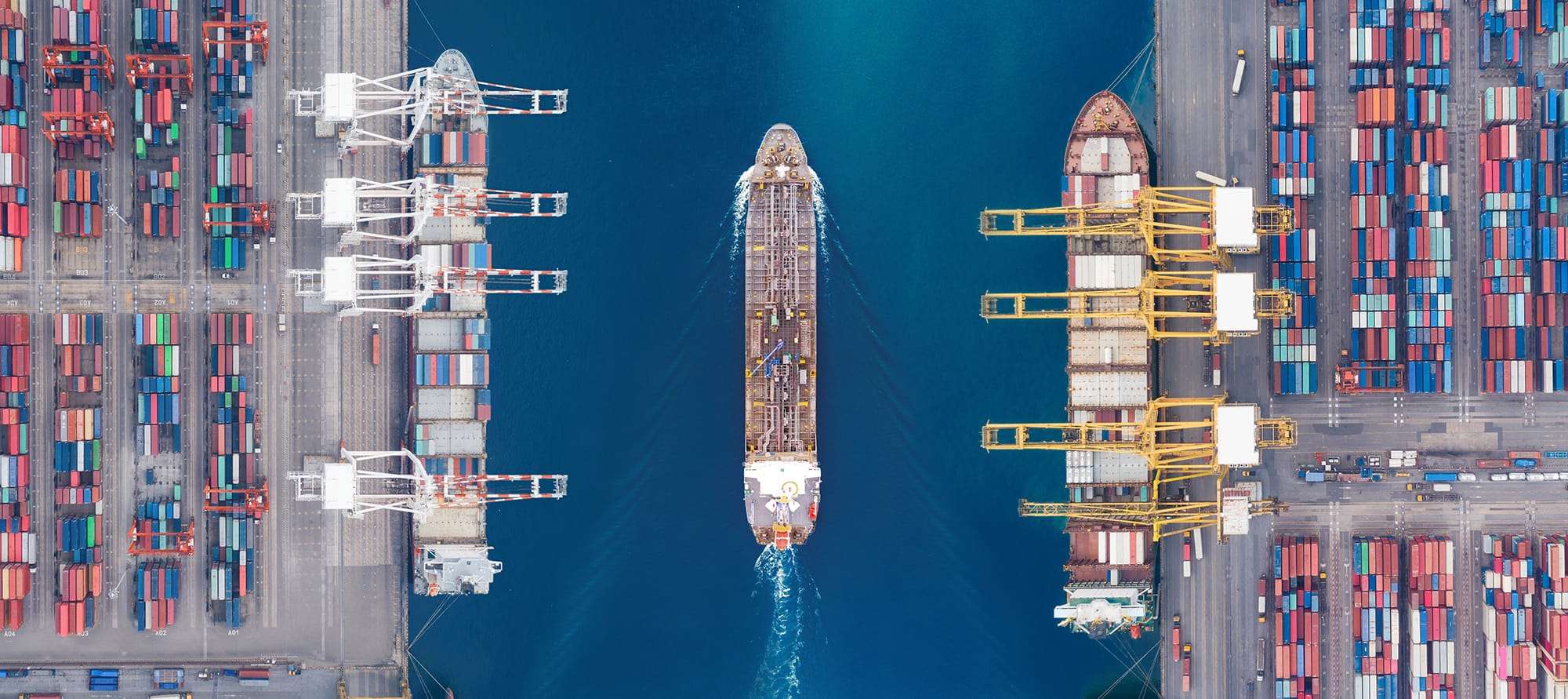
Can You Export a Salvage or Non-Running Car from the USA?
The short answer
Yes. US Customs is not interested in the condition of your vehicle.
This is the single most misunderstood point in vehicle export, and US Customs and Border Protection has been explicit about it for more than twenty years. When Customs published the current rules, it answered the question directly:
"Customs is not concerned with the condition of the vehicle exported, but rather the type and status of the documentation for the vehicle."
CBP restated the same position in its own 2020 ruling, and its public guidance says the certificate of title is the core requirement "regardless of the vehicle's economic value, physical condition, or operating order."
So a dead engine, a missing key, flood damage, a stripped interior or a rolling shell does not change whether you may export the vehicle. What changes the answer is which ownership document your state issued for it.

What actually matters
The document decides, not the damage
US export rules for used vehicles are set by 19 CFR 192.2. The regulation lists the acceptable ownership documents in a deliberate order, and CBP is emphatic that you work down it rather than picking the one that suits you. Its own guidance tells exporters to "begin at 19 CFR 192.2 (b)(1) and then progress through each subsection until the exporter arrives at the section and subsection(s) that apply."
In every case below, Customs wants the original document or a certified copy, plus two complete copies.
Covered explicitly
You hold a Salvage Title
- What CBP requires
- The original Salvage Title or a certified copy, plus two complete copies. A salvage title that remains in force is named in the regulation alongside an ordinary Certificate of Title.
- Does the damage matter
- No. The regulation treats a salvage title as a valid ownership document in its own right.
Covered explicitly
You hold a Junk or Scrap Certificate
- What CBP requires
- The original certificate or a certified copy, plus two complete copies, provided the certificate remains in force.
- Worth knowing
- CBP has accepted a state form that was labelled neither junk nor scrap, where it carried the VIN and certified transfer for scrap or salvage.
The fallback path
The title is no longer in force, or the vehicle was never required to be titled
- What CBP requires
- Your original basis of ownership, such as a bill of sale, plus two complete copies.
- The extra step people miss
- You must also establish that the issuing jurisdiction has no titling requirement for such a vehicle, AND certify in writing that the purchase was bona fide and the vehicle is not stolen.
Most common delay
There is a lien or the vehicle is leased
- What CBP requires
- Everything above, plus a separate letter from the lienholder or lessor expressly permitting export.
- The letter's required contents
- On the third party's own letterhead, with a full vehicle description including the VIN, the owner or lienholder name, telephone numbers for them, an original signature, and the date signed.
A "lien satisfied" stamp on the face of the title is not what the regulation asks for. 19 CFR 192.2(b)(1)(ii) asks for a separate document, on the lienholder's letterhead, carrying a telephone number Customs can call. This is one of the most common reasons a vehicle misses its sailing.
Timing
The 72-hour rule, stated correctly
For a vehicle leaving by sea, both the documentation and the vehicle itself must be presented to Customs at least 72 hours before export. Not one or the other. The vehicle has to physically be there.
That differs from a vehicle driven or trucked across a land border, where the paperwork goes in 72 hours ahead but the vehicle is presented at the time of export.
There is a subtlety here that most published guides get wrong, and it is worth understanding because it explains why your forwarder talks about the vessel cut-off rather than the sailing date. The regulation says 72 hours before export. The statute it rests on, 19 U.S.C. 1627a, says presentation must happen before lading for anything moving by vessel or aircraft, and sets no hour count at all. In practice ports enforce the 72 hours against the vessel's cut-off, which is why missing a cut-off by an hour can cost you the sailing even though the ship has not moved.
Customs designates where and when you present. There is no national address for this: port directors set the locations and publicise their hours, so the answer is specific to your port of export.
The filing
Your low-value car still needs an ITN
People are often surprised by this one. Most exports under $2,500 are exempt from Electronic Export Information filing. Used self-propelled vehicles are not. The rule at 15 CFR 30.2(a)(1)(iv) requires EEI "regardless of value", and names used vehicles specifically.
A $600 scrap car needs an ITN exactly like a $60,000 one.
Three further points that matter operationally:
- The clock is 72 hours, not 24. General ocean cargo gets its filing citation to the carrier 24 hours before loading. Used vehicles are 72 hours before export, and CBP has confirmed the 72-hour requirement continues to apply.
- You cannot file after departure. Used vehicles must always be transmitted before departure, so the postdeparture option is unavailable.
- If the filing system is down, the car waits. There is no downtime workaround for used vehicles: the rules state the filer "shall not export until the AES is operating and an ITN is acquired", and the usual downtime citation may not be used.
The ITN then has to appear, clearly visible, on the loading paperwork. That requirement is why a terminal will turn a vehicle away when the paperwork arrives without it.
At the terminal
Non-runners, forklifts and TWIC access
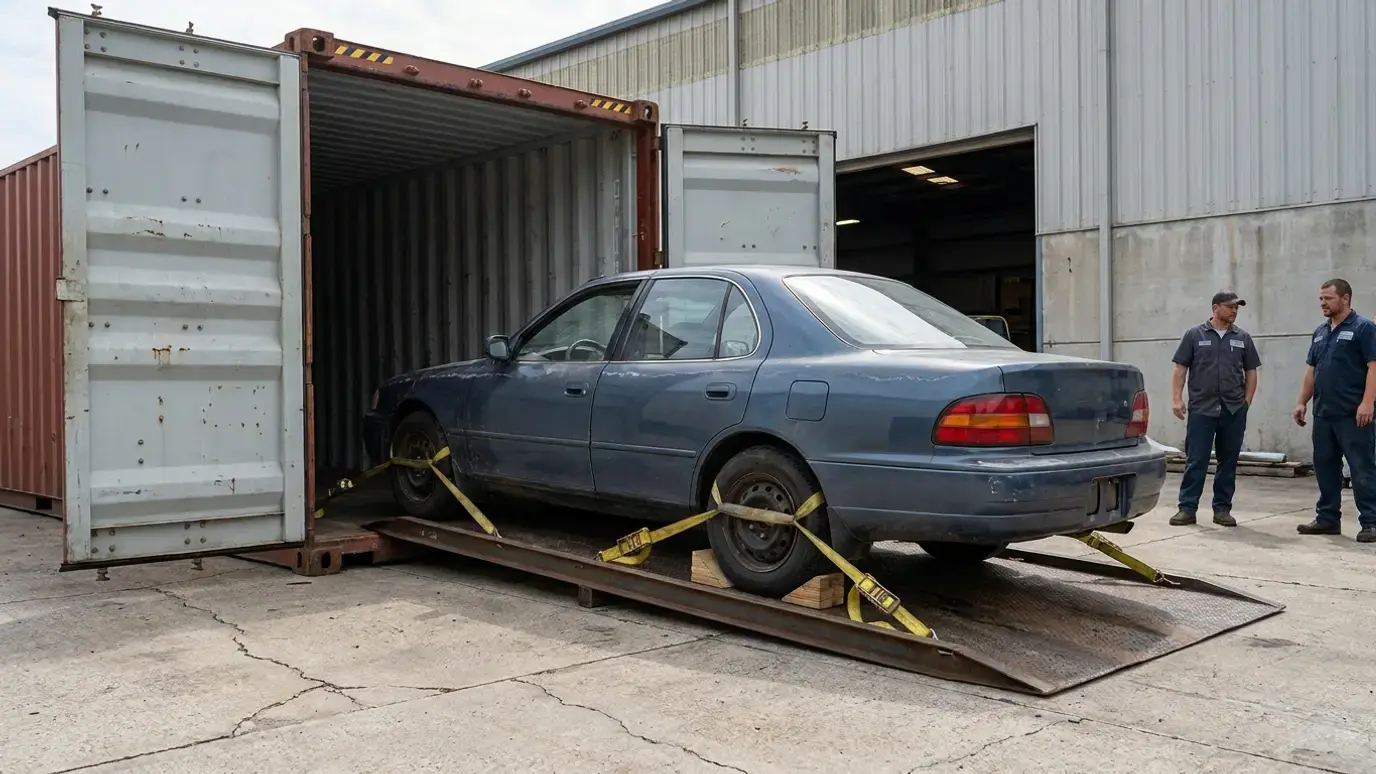
A vehicle that cannot be driven aboard has to be loaded another way, which is where handling charges come from. That is a commercial question rather than a regulatory one, and it is worth asking about before you buy: the cost of moving a non-runner varies by terminal and by carrier.
On terminal access, the legal position is narrower than most people assume. A Transportation Worker Identification Credential is required for unescorted access to a secure port area. Someone without a TWIC may still enter with compliant photo identification under escort, and each facility's security plan has to describe how it escorts visitors.
In practice, escorting costs the terminal labour. Many vehicle terminals will therefore not escort a walk-up delivery, or will charge for it, or will simply require the vehicle to arrive through a carrier or forwarder. Check with the specific terminal before you drive. Delivery requirements differ by terminal and by carrier, including how many copies of the title they want.
Not sure which document you actually hold?
Send us the title or the paperwork you have and we will tell you what US Customs will accept before you commit to a shipment.
Sources
Last reviewed
- 19 CFR 192.2, Requirements for exportation
The controlling rule. Last substantively amended 1999.
- 19 CFR 192.3, Penalties
- CBP, Exporting a Motor Vehicle
- CBP HQ ruling H308498 (9 March 2020)
Restates the Treasury Decision 99-34 position on vehicle condition.
- 15 CFR 30.2, EEI filing requirements
- 33 CFR 101.514 and 101.515, TWIC and escorted access