

A Freight Forwarder in Elizabeth, New Jersey
Where we work
Next to the terminals, not next to an airport road
Our office is at 1 Slater Drive, Elizabeth, NJ 07206, in the industrial strip that runs alongside the Port Newark and Elizabeth marine terminals. It is a working address rather than a mailing one, and the reason it matters to a customer is narrow and practical: the gates our vehicles load through are minutes away rather than a day's drive away.
A vehicle export page written in another state can be perfectly accurate about the regulation and still have nobody who can walk into a terminal office when a dock receipt is wrong. Proximity does not change what US Customs requires, and we would not claim it does. What it changes is how quickly a problem at a gate stops being a problem.
The gates
Two Port Newark auto terminals, and they do not ask for the same paperwork
Our own terminal records carry two New Jersey entries. Both are at Port Newark, both are on Marsh Street, and they are separate records rather than duplicates, because the carrier decides the terminal and the terminal decides the paperwork. A vehicle going out on one line is not interchangeable with a vehicle going out on the other, and the document counts are the proof of it.
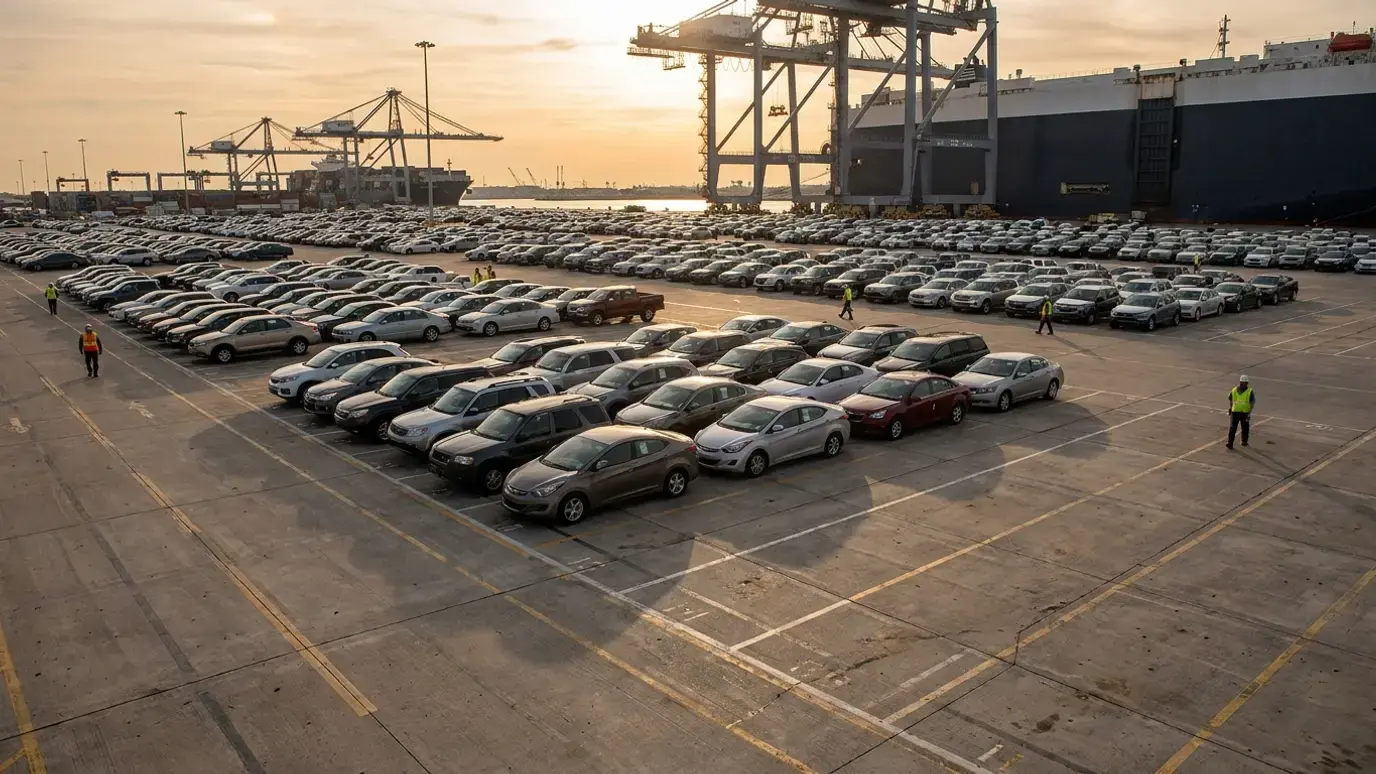
138 Marsh Street, Newark
Port Newark, Sallaum Lines
- Receiving hours
- Monday through Friday, 8 AM to 4 PM
- Documents at the gate
- Original title, 3 copies of the dock receipt.
- TWIC
- No TWIC note is carried on this record. Confirm access with the terminal before you drive.
Ports America, Berths 16 and 18, 171 Marsh Street, Newark
Port Newark Auto Terminal, Grimaldi
- Documents at the gate
- Original title, 6 copies of the front and back of the title, 6 copies of the dock receipt.
- TWIC
- TWIC Card is not required at this gate, per our record.
- Worth noting
- Twice the title copies and twice the dock receipt copies of the Sallaum record, on the same street.
Why we publish it that way
Three copies at one gate, six at the next
It would be tidier to average those two records into one Port Newark entry. We do not, because the difference is the useful part. A dealer moving units through both carriers in the same week is working to two different document sets in the same square mile, and a page that smooths that over produces a vehicle turned away at a gate.
The same pattern runs down the rest of our record. Beyond New Jersey it covers Philadelphia, Wilmington in Delaware, three separate Baltimore terminals, Providence and Davisville in Rhode Island, Boston, and further south Savannah, Jacksonville and Freeport in Texas. Several of those ports appear more than once under different carriers with different requirements, and one of them asks for copies of a letter of intent that no other gate mentions. Every record, with its delivery address, receiving hours, telephone number and document set, is on loading ports.
One thing our record does not contain is a New York terminal. If a page tells you it loads from New York and New Jersey as a matched pair, ask which terminal, because the two sides of the harbour are not one operation.
The calendar
A weekday gate and a 72-hour rule do not leave much room
The Sallaum record for Port Newark gives receiving hours of Monday through Friday, 8 AM to 4 PM. That single line does more damage to more shipments than any regulation, because of what it collides with.
US Customs requires the documentation, and for a vessel export the vehicle itself, to be presented at least 72 hours before export, and the export filing for a used vehicle runs to the same 72-hour clock rather than the 24 hours general vessel cargo works to. Stack that against a gate that is shut at the weekend and the arithmetic gets unforgiving quickly. A title that surfaces on a Friday afternoon is not three days from a Monday cut-off in any practical sense, it is one working day from it.
This is why we ask for the destination and the state of the title before we talk about trucks. The sequence is fixed by the regulation and the receiving hours, and the only variable anyone actually controls is how early the paperwork starts moving. What being here adds is that when something does slip, the terminal is a short drive rather than a phone queue.
Getting in
Whether you need a TWIC to deliver your own car
This is the most common question we get from individuals delivering a vehicle themselves, and the honest answer has two layers.
The legal rule. A TWIC is required for unescorted access to a secure area of a maritime facility. A person without one may be admitted under escort with a compliant photo ID, and each facility's own security plan sets out how it handles escorting.
The practical rule. Escorting costs the terminal labour, so terminals reach different answers. Our record notes TWIC explicitly on some gates and not others, which is exactly why it is recorded per terminal rather than stated once as a site-wide policy. Check the specific gate before you drive, or let us deliver the vehicle for you.
Confirm the gate before the vehicle moves, every time. Terminal requirements change, and our records carry a last-confirmed date for that reason. If you are delivering a vehicle yourself, call us or call the terminal first. Turning a loaded truck around at a gate costs more than the phone call.
Who we do this for
Dealers running volume, and people shipping one car
Two quite different customers use the same terminals through us.
Dealers and exporters buying at auction. Repeat buyers at IAA, Copart and the equipment sales who need units collected from the yard, routed to the right carrier's terminal and gated in with the correct document set. The work here is mostly sequencing: titles arriving at different times to different lots, several sailings in play at once, and a different paperwork requirement at each gate. If that is you, the process end to end is set out on exporting a vehicle you bought at auction.
Individuals shipping one vehicle. A car being sent to family, a vehicle following an owner overseas, or a single purchase that needs to reach a port it cannot be driven to. The requirements are identical to the dealer's, which surprises people. There is no simplified route for a single private vehicle, and the export filing applies regardless of what the vehicle is worth. Start with how to export a car from the USA.
We also collect vehicles from auctions and dealerships across the region and deliver them to the closest suitable port, aiming to have units picked up within 2 to 3 days depending on the location and the driver's availability.
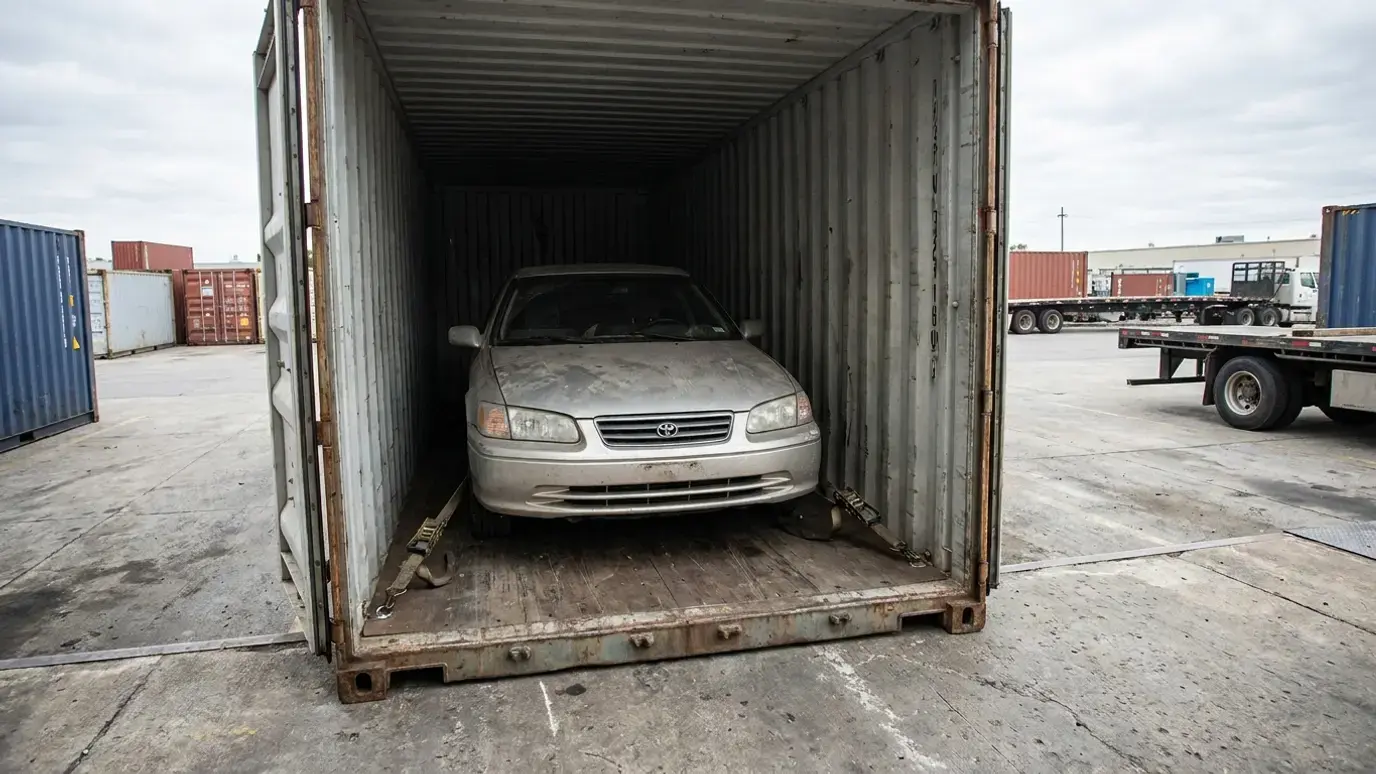
Shipping out of Port Newark?
Tell us the vehicle, where it is now and where it is going, and we will confirm the terminal, the paperwork that gate wants and what has to happen before the cut-off.
Sources
Last reviewed
- Our own record, loading ports
Our own terminal records, including both Port Newark entries, their receiving hours, document counts and TWIC notes. Operational data, confirmed on the review date above.
- Our own record, how we ship
Our own record of auction and dealership collection and the 2 to 3 day pickup window.
- 19 CFR 192.2, Requirements for exportation
The 72-hour presentation rule referred to above. Explained in full on /export-a-car-from-the-usa/.
- 15 CFR part 30, Foreign Trade Regulations
The used-vehicle export filing clock at 30.4, which runs to 72 hours rather than the 24 hours that applies to general vessel cargo.
- 33 CFR 101.514, TWIC requirement
A TWIC is required for unescorted access to a secure area.
- 33 CFR 101.515, Identification for escorted access
Compliant photo identification for persons entering under escort.
- 33 CFR 105.255, Facility access control
Puts the duty on the facility and requires its security plan to describe escort procedures, which is why the answer differs by gate.