
RoRo or Container? How to Choose for a Vehicle
The actual difference
One drives aboard. The other is packed into a box.
Strip away the jargon and the choice is physical.
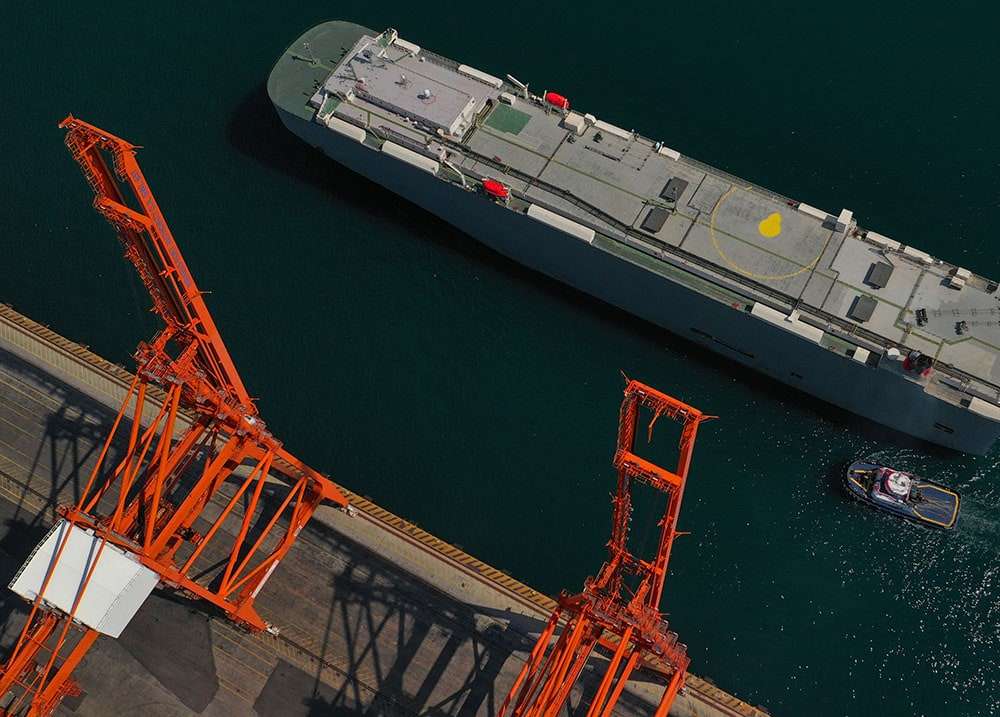
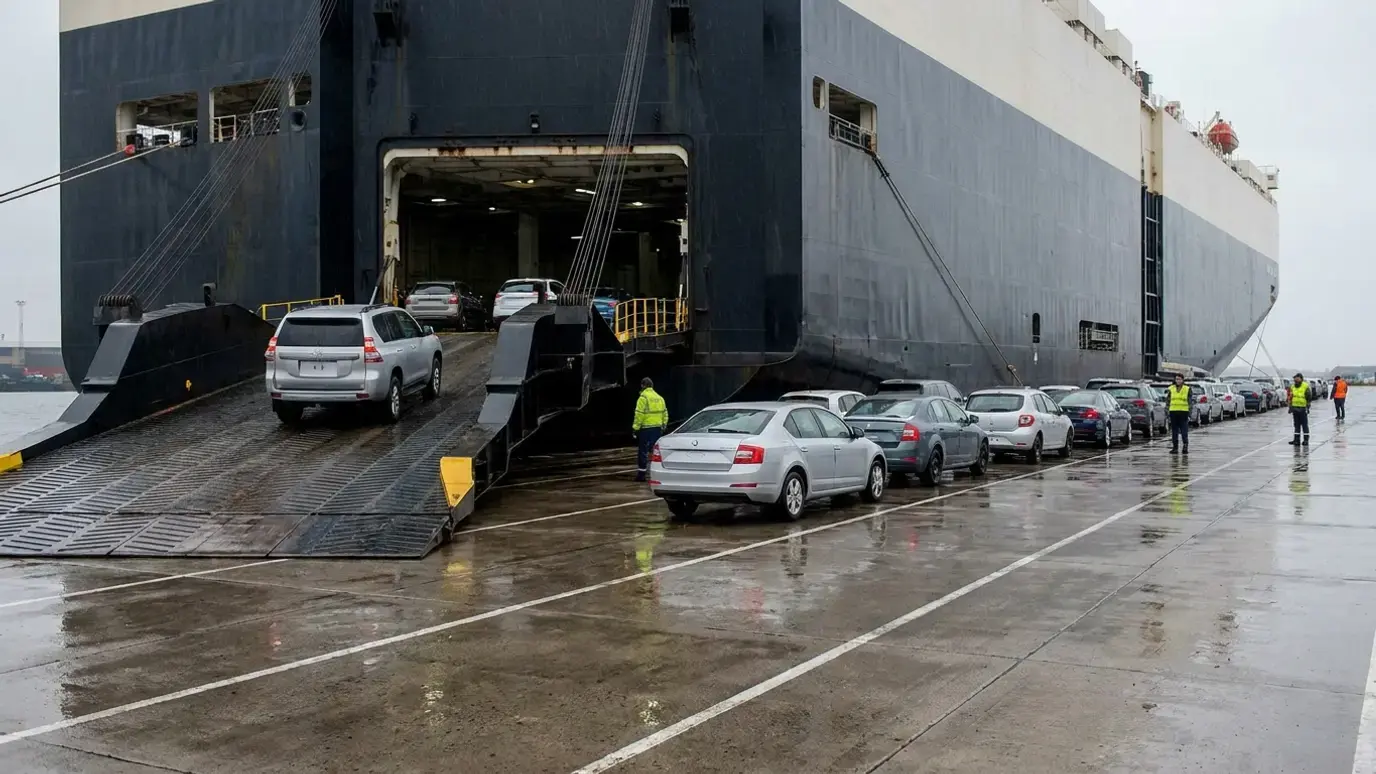
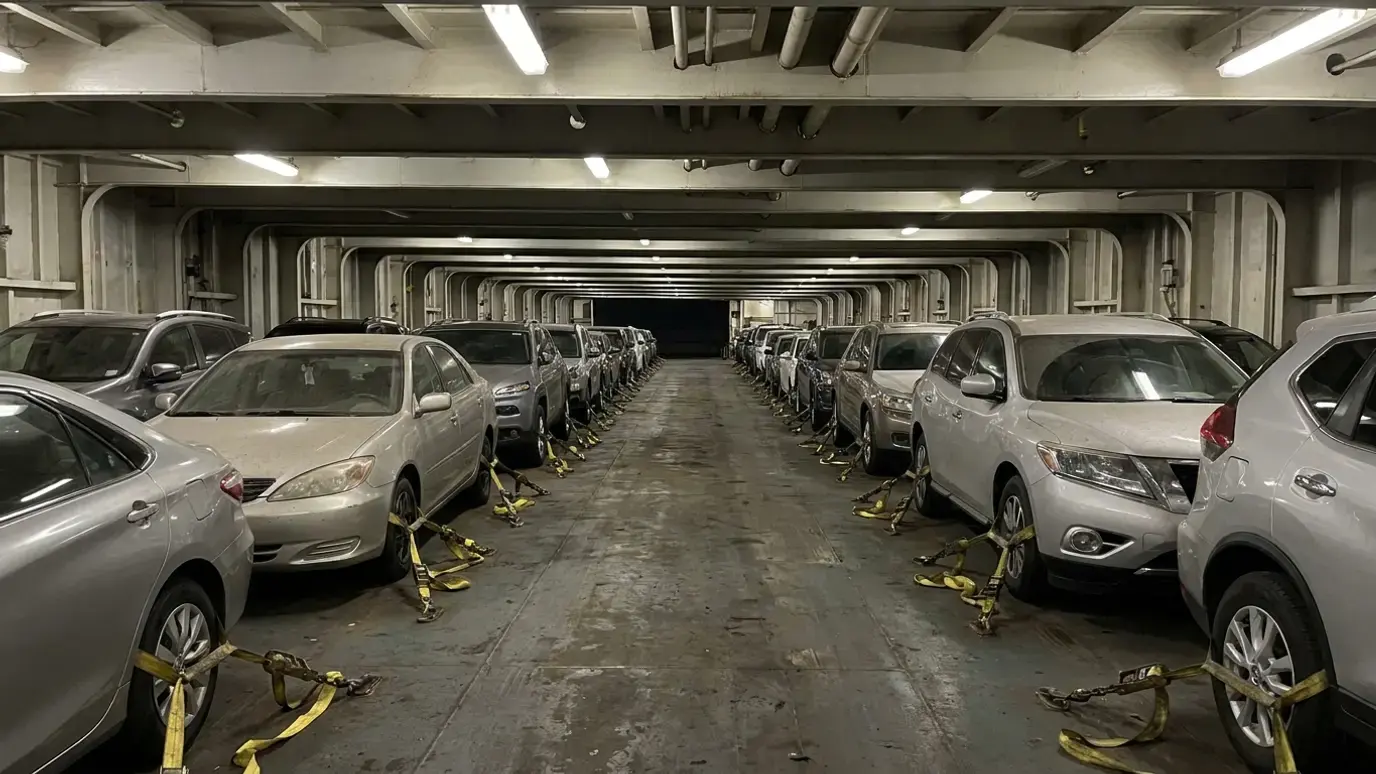
Roll-on roll-off, or RoRo, means the vehicle is driven up a ramp onto a dedicated vehicle carrier, parked on a deck and lashed down. It travels as a vehicle. Nothing is built around it.
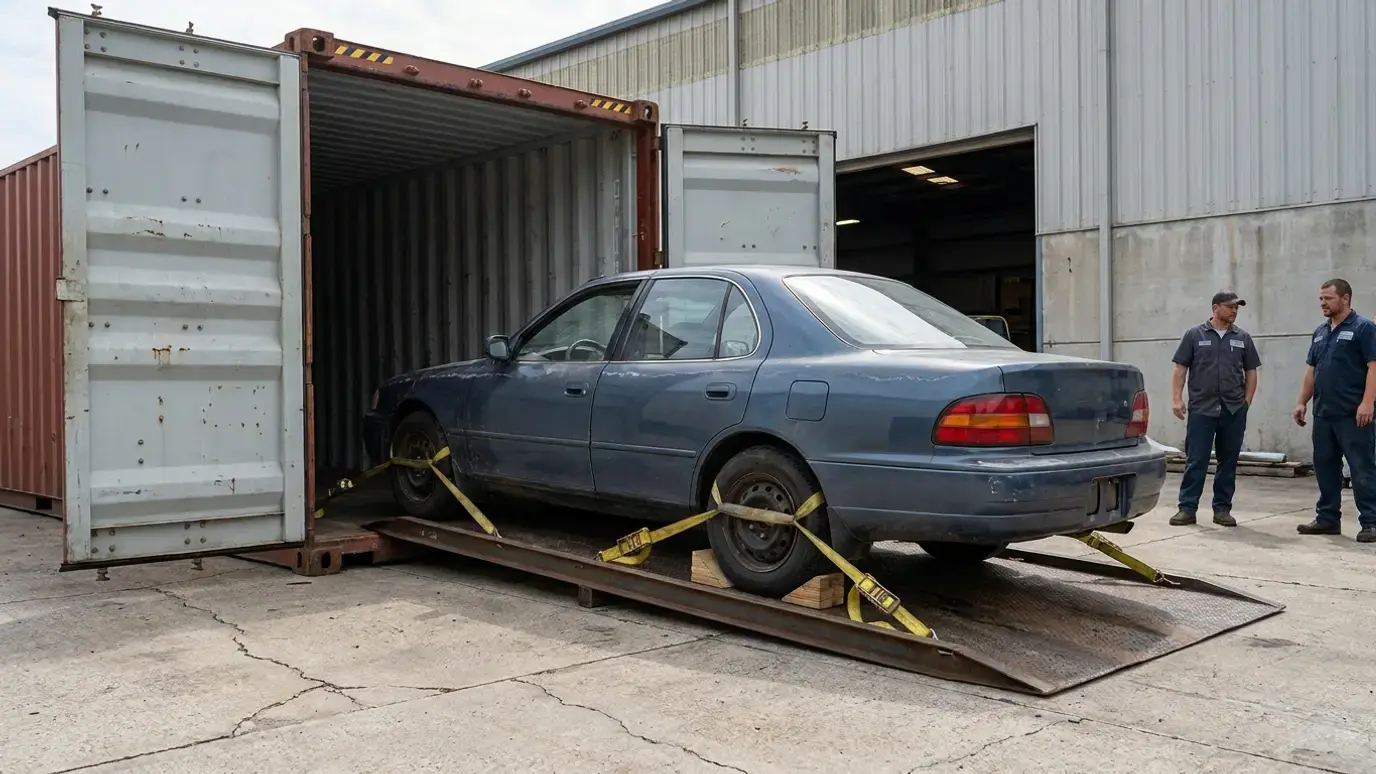
Container shipping means the vehicle is driven or winched into a shipping container, secured inside, and the doors are closed and sealed. It travels as freight. The container may carry only your vehicle, or it may be shared with other vehicles or cargo.
Almost every practical difference between the two follows from that one distinction, and so does the first question worth asking about your own vehicle.
The vehicle is the unit
RoRo
- The vehicle must
- Roll, steer and brake, so it can be driven up a ramp and manoeuvred on deck under its own power.
- Handling
- Driven aboard and driven off by terminal staff. It is delivered to the vessel terminal itself rather than to a packing facility.
- What travels with it
- The vehicle, essentially. There is no enclosure around it to declare separate contents in.
- Natural fit
- A single running car, van, pickup or truck, or a piece of wheeled plant, going to a port with a vehicle service.
The box is the unit
Container
- The vehicle must
- Fit, and be movable into the container. It does not have to be roadworthy, and it does not have to be driven aboard the vessel.
- Handling
- Loaded and secured once at a packing point, then not touched again until it is unpacked at destination. The doors are sealed in between.
- What travels with it
- Potentially more than the vehicle, because a sealed container has declarable contents. What is actually permitted is set per booking, see below.
- Natural fit
- Enclosure, non-runners, dismantled or oversized items, several vehicles moving together, or a vehicle plus goods.
Question one
Does the vehicle actually roll?
This is the question that settles most cases before anything else is discussed.
RoRo is not simply "the vehicle has an engine". A vehicle that is driven aboard has to start, steer and stop, on a ramp, in a queue, handled by someone who has never sat in it before. A car with a seized brake, no key, a locked steering column, a flat battery that will not hold, or a suspension that will not clear a ramp angle is not a RoRo unit in any useful sense, however complete it looks in the photographs.
If the vehicle will not do those things, it has to be moved another way: winched, forklifted, or loaded into a container. That is a commercial and handling question rather than a regulatory one, and it is worth asking before you buy, because it changes the shape of the shipment.
What it does not change is your right to export the vehicle at all. US Customs has been explicit that it is not concerned with the condition of the vehicle, only with the ownership document. That is covered in full on salvage and non-running vehicles, which is the page to read if your vehicle came from an auction, a total loss or a yard.
We do not publish a rate here. Vehicle rates move with the lane, the carrier, the vessel, the season and the dimensions of the specific vehicle, and any figure printed on a marketing page is either out of date or not about your shipment. Send us the vehicle and the destination and we will quote the real thing: get a quote.
Question two
Are you shipping anything besides the vehicle?
This is the difference people underestimate, and it is structural rather than a matter of policy.
A container is a sealed unit whose contents are declared on the shipping documents. That is what makes it possible to move household goods, spares or trade stock in the same shipment as a vehicle at all. A vehicle on a RoRo deck has no such enclosure: it is handled, parked and lashed as an open unit among hundreds of others.
What may actually travel with a vehicle is set by the carrier and by the destination customs authority, not by a general rule, and it varies by lane. Some destinations treat personal effects inside a vehicle as a separate declarable import; some carriers refuse them outright. Confirm it for your specific booking before you load anything, and never assume that because it was allowed on one sailing it is allowed on the next.
Question three
How many vehicles, and how big?
A single running car is the case RoRo was designed for. It goes aboard as one unit and is billed as one unit.
Several vehicles moving together is where containerisation starts to make sense, because a container can hold more than one vehicle depending on their dimensions, and consolidating them into one unit changes the arithmetic of the whole shipment. Dealers and exporters moving vehicles regularly to the same destination tend to think in containers for this reason, not because containers are inherently better for a car.
Height and length matter more than people expect in both directions. A tall van, a lifted truck or a piece of plant can exceed the internal height of a standard container and still be perfectly straightforward on a RoRo deck. The reverse is also true: something dismantled, palletised or non-rolling is easy in a box and awkward on a ramp. Give whoever is quoting you the real dimensions rather than the model name.
One running car, straightforward destination
RoRo is the natural fit. The vehicle drives on, drives off, and nothing is built around it.
A vehicle that will not start or steer
RoRo may not be available at all. Expect the conversation to move to containerisation or to special handling.
A high-value, classic or freshly restored vehicle
A container encloses it and it is handled once at each end rather than driven repeatedly by terminal staff.
Two or more vehicles to the same destination
Consolidating into a container is worth pricing against separate RoRo units before you commit.
A vehicle plus household goods or spares
Only a container gives you a declarable enclosure to put them in, and even then confirm what the destination permits.
Oversized, dismantled or on a trailer
Measure first. Height and length decide this one, not the vehicle category.
Side by side
The same three questions, answered both ways
| Dimension compared | RoRo | Container |
|---|---|---|
| How it travels | Driven up a ramp onto a vehicle deck, parked and lashed down. It travels as a vehicle, with nothing built around it. | Driven or winched into a container, secured inside, doors closed and sealed. It travels as freight. |
| If it will not roll | The unit has to start, steer and stop on a ramp, in a queue, handled by someone who has never sat in it. A seized brake or a missing key rules it out. | A unit that will not drive can still be winched or forklifted in, which is usually why a container enters the conversation. |
| Sending anything with it | No enclosure. The vehicle is handled, parked and lashed as an open unit among hundreds of others. | A sealed unit whose contents are declared, which is what makes household goods, spares or trade stock possible in the same shipment. |
| Steps that can slip | Fewer moving parts at either end. | Positioned, packed, secured, sealed, then unpacked at destination. Every one of those is a step that can be delayed. |
| What you give up | Enclosure. That exposure is normal and designed for, but it is real if the vehicle's condition is the point of the vehicle. | Simplicity, and you are committing to a box. If the vehicle does not fit, the plan changes late. |
| US Customs | Same ownership document, same filing, same 72-hour presentation. | Same ownership document, same filing, same 72-hour presentation. |
The honest trade-offs
Neither one is simply better
RoRo gives up enclosure. The vehicle is driven by people who are not you, parked on a deck with many others, and handled at both ends. That is the normal, designed-for way vehicles move by sea and it is not a defect, but if the vehicle's condition is the point of the vehicle, that exposure is a real consideration.
Containers give up simplicity. A container has to be positioned, packed, secured, sealed and then unpacked at destination, and every one of those is a step that can be delayed. You are also committing to a box: if the vehicle does not fit, the plan changes late.
Both depend on what actually calls at your destination. Not every port pair is served by both methods, and the availability of a vehicle service is a question about carrier schedules rather than a matter of preference. Our loading ports page lists the ports, terminals and carriers we book from, with the delivery address and receiving hours for each.
What does not change
US Customs asks for the same things either way
It is worth being clear about this, because the choice feels consequential and in one respect it is not.
Choosing RoRo or a container changes nothing about the US export requirements. Either way, under 19 CFR 192.2, you present the ownership document with two complete copies, and for anything leaving by sea you present the documentation and the vehicle to CBP at least 72 hours before export. Either way, the Electronic Export Information filing is required regardless of the vehicle's value, and the resulting ITN has to be on the loading paperwork.
The full process is on how to export a car from the USA. Read that first: it applies to your shipment whichever answer you reach on this page.
Common questions
Which one is cheaper?
- That depends on the lane, the carrier, the vessel and the vehicle's dimensions, and any figure published on a website is not a quote for your shipment. Send us the vehicle and the destination and we will price both where both are available.
Can I ship a car that does not run?
- You can export it: US Customs is concerned with the ownership document rather than the condition of the vehicle. Whether it can go RoRo is a separate handling question, because RoRo needs the vehicle to roll, steer and brake. Containerisation and special handling are the usual alternatives.
Can I put boxes or household goods in the car?
- Do not assume so. What may travel with a vehicle is set by the carrier and by the destination's customs authority and it varies by lane, so it has to be confirmed for your specific booking. A container gives you a declarable enclosure; a vehicle on a RoRo deck does not.
Is a container safer for a classic car?
- A container encloses the vehicle and means it is handled once at each end rather than driven repeatedly by terminal staff, which is why owners of high-value and restored vehicles often prefer it. It is a trade against added packing and unpacking steps, not a guarantee.
Can I put two cars in one container?
- Often yes, depending on the dimensions of the two vehicles and the container used. Consolidation is one of the main reasons dealers and regular exporters choose containers over separate RoRo units.
Does the paperwork differ between RoRo and container?
- The US export requirements do not change. 19 CFR 192.2 presentation, the ownership document with two complete copies, and the export filing with its ITN apply either way.
Tell us the vehicle and the destination.
We will tell you which methods actually serve that lane and price the ones that do, against your real vehicle rather than a published table.
Sources
Last reviewed
- 19 CFR 192.2, Requirements for exportation
The presentation and documentation requirements, which apply regardless of shipping method.
- 15 CFR part 30, Foreign Trade Regulations
EEI filing required for used vehicles regardless of value, at 30.2.
- CBP, Exporting a Motor Vehicle
CBP's position that the title requirement applies regardless of the vehicle's condition or operating order.